How to Verify Candidates Before Sending Them to Clients
Before sending a candidate to a client, staffing agencies need to know more than whether the CV looks right. This guide explains what to verify, when to do it and how to build candidate verification into the recruitment process.
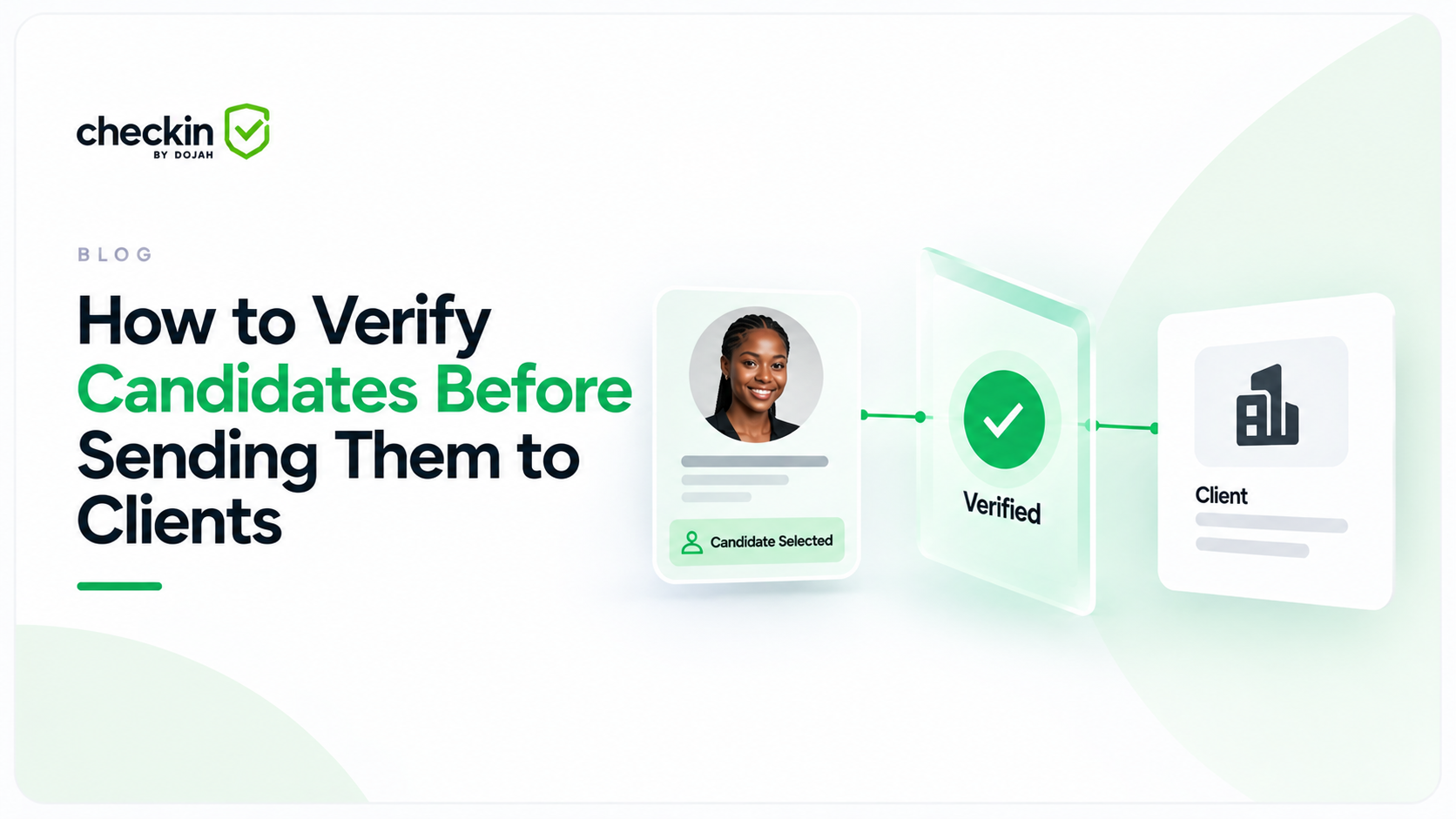
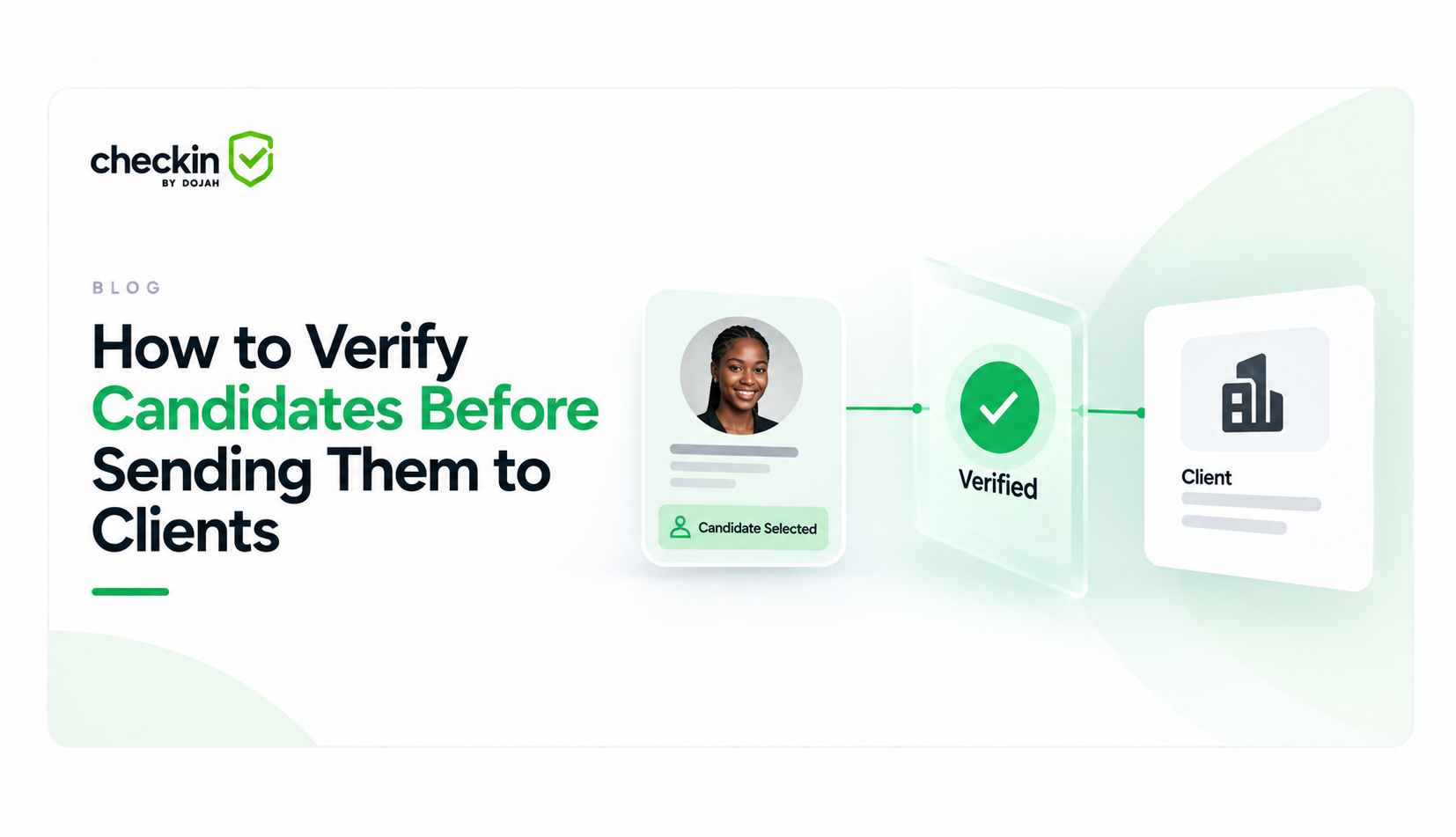
How to Verify Candidates Before Sending Them to Clients
Finding a candidate who looks right for a role is one thing, sending that candidate to a client is another. By the time a candidate reaches a client, the staffing agency is putting its own name behind that submission. The CV may look good and the recruiter may have had a great conversation with the candidate, but there are still basic questions worth answering before making the introduction.
Is this person who they say they are? Have the required identity documents been checked? Has the candidate completed the verification required for this role or client?
Leaving those questions until later can create unnecessary back-and-forth when the recruitment process is already moving.
Candidate verification works better when it happens at a clear point in the recruitment process, before the candidate is submitted to the client. This guide explains what staffing agencies should verify before sending a candidate to a client, when those checks should happen and how to build verification into the recruitment process without creating more work for recruiters.
Why Verify Candidates Before Client Submission?
Client submission can happen quickly, especially when several agencies are working on the same vacancy. That pressure can make it tempting to submit a promising candidate first and deal with verification later. The problem is that any issue discovered afterwards now affects a candidate the client already knows about.
Perhaps an identity document cannot be verified. Maybe required information is missing. Or the candidate hasn't completed a check the client expects before progressing.
The recruiter then has to go back, resolve the issue and update the client.
Verifying candidates earlier gives the agency a clearer picture of who it is putting forward. It also makes verification part of the recruitment process rather than something added at the end when everyone is already trying to move quickly.
What Should Staffing Agencies Verify Before Sending a Candidate to a Client?
No single verification checklist applies to every staffing agency or every role.
A warehouse placement, an office role and a position with additional client requirements may each need different checks.
The key is to decide what needs verifying before the recruiter reaches the submission stage.
- Candidate Identity: Start with the person behind the application. Recruiters regularly work with candidates they have never met in person. Applications, screening calls and interviews can all happen remotely, so the agency needs a reliable way to establish that the candidate is who they claim to be.
This is where identity verification becomes different from simply having a name, phone number and CV on file. The agency should have a defined process for confirming identity rather than leaving each recruiter to make that judgement independently. - Identity Documents: If your process requires an identity document, receiving a copy is only the first step. A candidate can send a passport, driver's licence or another accepted document through email or WhatsApp, but receiving the image doesn't authenticate the document.
The agency still needs to consider whether the document can be verified and whether it belongs to the candidate presenting it. This becomes particularly important when the entire recruitment process is remote and the recruiter never sees the original document in person. - Information Required for the Role: Identity is not necessarily the only information that needs to be checked before submission. Depending on the role, your agency may need specific information or documentation from the candidate before they can progress. The key is to define those requirements in advance.
If recruiters only discover what is missing when they're preparing a candidate for a client, verification becomes another last-minute task. Building the required checks into the process earlier makes it easier to know when a candidate is actually ready to move forward. - Client-Specific Verification Requirements: Different clients may have different requirements. One client may only require certain checks at a later stage, while another may expect candidates to meet specific requirements before their profiles are submitted.
Recruiters should not have to remember those differences from memory every time they work on a vacancy. For recurring client requirements, it makes more sense to define what candidates need to complete and use the same process whenever the agency recruits for that client.
Collecting Candidate Documents Is Not the Same as Verifying Them
This is an easy distinction to miss. A candidate sends the requested document. The recruiter saves it. The spreadsheet is updated. The process looks complete because the agency now has everything it asked for.
But what has actually been established?
If the document was only received and visually inspected, there may still be questions about whether it is authentic and whether it belongs to the person who submitted it.
This is why the goal should not simply be to get candidate documents in before submission. The goal is to complete the checks your agency needs before deciding that the candidate is ready to be presented to a client.
Document collection can be part of that process. It shouldn't automatically be treated as the verification itself.
Build Verification Into the Recruitment Process
Verification is easier to manage when recruiters know exactly when it should happen. Instead of waiting until a candidate is about to be submitted and then asking for several documents at once, decide which checks should happen earlier and make them a standard part of the workflow.
For example, once a candidate passes the initial screening stage, the recruiter can send the required verification before preparing the candidate for client submission. The candidate completes the checks, the team reviews the results, and anything requiring attention can be dealt with before the client is involved.
This does not mean every candidate needs every possible check. It means the agency has a clear answer to a simple question: What needs to be completed before we send this candidate to the client?
Once that answer is defined, recruiters have a process they can follow instead of deciding what to request each time.
Verify Candidates With CheckIn Before Client Submission
CheckIn gives staffing agencies a no-code way to create verification flows for the checks they want candidates to complete.
Rather than collecting candidate information across individual WhatsApp conversations, emails and folders, recruiters can send candidates a verification link and keep the verification itself in a dedicated process.
That also gives agencies flexibility in how they structure verification. If different roles or clients require different information, the verification flow can be built around what needs to happen before that candidate progresses.
Recruiters can continue using WhatsApp, email or SMS to communicate with candidates. They simply don't have to use those conversations as the verification system.
The result is a clearer point in the recruitment process where the team can see if the candidate has completed what is required before being put in front of the client. If the answer is yes, the recruiter can move forward with more confidence.
Build your candidate verification flow with CheckIn.
Filed under